Because “winging it” is exhausting.
Modern mum life includes school emails (a LOT of them), work deadlines, groceries, birthdays, forgotten homework, swimming bags, laundry that appears to reproduce every three hours, and “Spirit Week” costume requests announced at 8pm for the following morning.
It is a lot to hold in your head.
The good news? You do not need a colour-coded life, a military-grade routine or twelve different apps. You simply need a simple weekly family planning system that puts the important things in one visible place.
Here is a realistic weekly planning routine for busy families.
Step 1: Do a 30-Minute Sunday Reset
Set a timer for 30 minutes. Pour something warm. Gather your planner, school diary, phone and any notes that have been living in the bottom of your handbag since Tuesday.
Then write down everything happening that week in one place:
- School activities and homework deadlines
- Appointments
- Work calls and deadlines
- Birthdays or social plans
- Grocery needs
- Family admin you keep meaning to deal with
When your week lives on paper or in one shared system, it stops living entirely in your brain. You are no longer trying to remember whether Wednesday is swimming, library day or the day someone needs to dress as a vegetable.
Keep this reset simple. The goal is not to plan every second of every day. It is to see what is coming, spot the busy days and make a few decisions before the week starts running away from you.
Useful products:
- A weekly family planner pad
- A Sunday reset checklist printable
- A pretty pen set or highlighters
- A family command-centre organiser
Step 2: Use a Weekly Overview Planner
A weekly overview planner is the heart of a simple family organisation system. Choose one that lets you see Monday to Sunday at a glance, rather than hiding everything on separate daily pages.
Seeing the whole week helps you plan around the chaos.
You can immediately notice:
- Which evening is packed with activities
- When you need to prep lunchboxes or school bags in advance
- Which day needs an easy dinner
- Where there is space for a coffee date, walk or a moment to breathe
If it includes a space for your top priorities, notes and habit tracking, even better.
A planner does not need to be complicated to be useful. In fact, the best one is usually the one you will realistically open and use every week.
Useful products:
- Undated weekly desk planner
- Family planner with meal-planning section
- Magnetic weekly fridge planner
- Habit-tracker notepad
- Coloured pens or mildliner markers
Step 3: Create a Visible Family Calendar
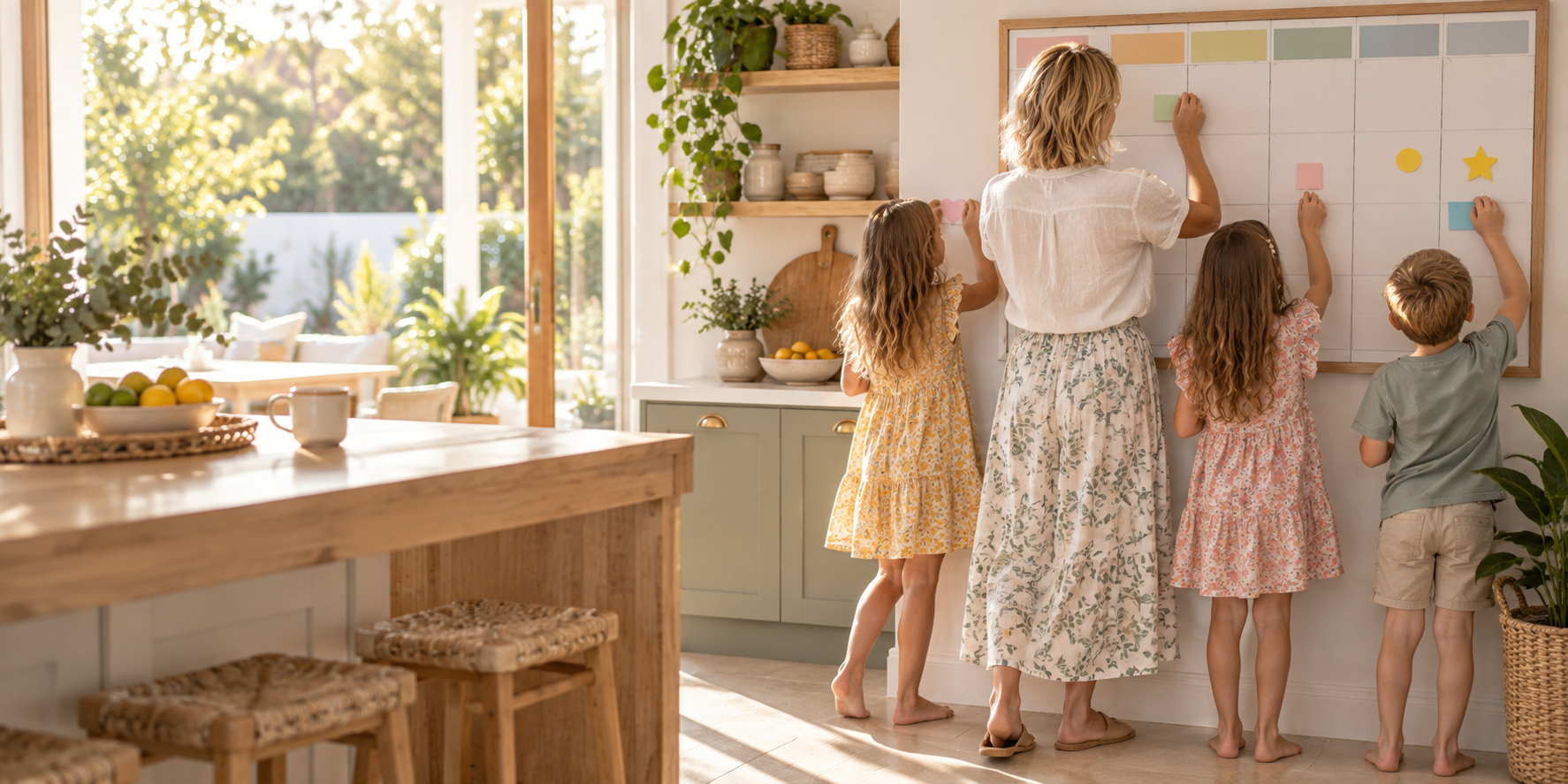
A family calendar only works if everyone can see it.
Choose a wall calendar, whiteboard, magnetic fridge planner or family command centre and place it somewhere central. The kitchen is usually ideal because that is where the shoes go missing, the snack requests begin and every urgent question somehow finds you.
Write down school events, sports, birthdays, appointments and after-school activities. Use a different colour for each family member if that makes life easier, but do not feel pressured to make it look like a Pinterest masterpiece.
The aim is clarity, not a stationery shop display.
When children can see what is happening, they start learning what to expect. It also means you may hear fewer questions like, “What are we doing tomorrow?” repeated forty-seven times between breakfast and bedtime.
For younger children, add small pictures or symbols beside activities: a book for library day, a ball for sport or a swimsuit for swimming. It makes the calendar easier for them to understand and gives them a little more independence too.
Useful products:
- Large wall calendar
- Magnetic fridge calendar
- Dry-erase family planner
- Colour-coded calendar markers
- Picture schedule cards for younger children
Step 4: Meal Plan – But Keep It Real
Meal planning is one of the simplest ways to make weekday afternoons feel less chaotic. And no, this does not mean you need to prepare twelve freezer meals while listening to a podcast about abundance.
It simply means deciding what is for dinner before everyone is hungry.
A realistic family meal plan could look like this:
- Four planned dinners
- One leftovers night
- One “whatever is easy” night
- One flexible night for takeaways, breakfast-for-dinner or using up what is already in the fridge
Think of your busiest day of the week and make that your easiest dinner. Pasta, wraps, toasted sandwiches, slow-cooker meals or a freezer backup all count.
It helps to keep a running list of family meals everyone will eat without negotiations. Not every meal needs to be nutritious, beautiful and approved by a tiny food critic.
The goal is fewer last-minute supermarket dashes and less standing in front of the fridge at 5pm wondering why nobody has invented a dinner fairy.
Useful products:
- Weekly meal-planning notepad
- Magnetic meal planner for the fridge
- Slow cooker or family air fryer
- Reusable food-storage containers
- Grocery-list notepad or fridge list
Step 5: Plan Three Small Adventures
Family life should not only be about getting through the week. Plan three small things that gives everyone something to look forward to.
It does not need to be expensive or elaborate. Adventure is a mindset, and it can be as simple as:
- A beach walk with snacks
- A bike ride
- An ice cream run (even if its the McDonalds drive through)
- A picnic in the garden
- A new playground
- A family movie night with homemade popcorn
- A nature scavenger hunt
- A sunset walk after dinner
Put it in the planner like you would any other appointment. Because if we wait until everything is finished, the washing is folded and everyone is rested, we may be waiting until 2047.
A small adventure breaks up the routine, creates lovely family memories and reminds you that a good life does not have to be perfectly planned. It just needs a little room for joy.
Useful products:
- Family picnic blanket
- Insulated snack bag or cooler bag
- Children’s water bottles
- Nature scavenger-hunt printable
- Family adventure journal
- Outdoor blanket or foldable camping chairs
A Simple Weekly Planning System Is About Peace, Not Perfection
The best family planning system is not the prettiest one. It is the one that helps you feel less overwhelmed.
A 30-minute weekly reset, one visible calendar, a realistic meal plan and small family adventures can make a busy week feel far more manageable.
Structure does not restrict you. It protects your peace.
And if the plan falls apart by Tuesday? That is fine too. Move things around, order the easy dinner and try again next week. You are running a family, not a hospital.
Leave a Reply